Posts

Showing posts with the label Change

The Importance of Bodhicitta
Image
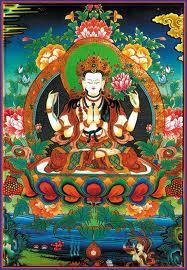
The highest perfection of altruism, the ultimate altruism, is bodhicitta complemented by wisdom. Bodhicitta, the aspiration to bring about the welfare of all sentient beings and to attain buddhahood for their sake, is really the distilled essence, the squeezed juice, of all the Buddha's teachings, because ultimately the Buddha's intention is to lead all sentient beings to perfect enlightenment, complete omniscience. Since it is bodhicitta that determines whether or not our practice becomes the path to enlightenment, bodhicitta is truly the heart essence of all the teachings of the Buddha. Thus, all 84,000 discourses of the Buddha can be seen as either preliminary to the practice of bodhicitta, the actual practice of bodhicitta, or precepts and activities in which we must engage as a result of taking the bodhicitta pledge. When we come to recognise all this, we will really appreciate the preciousness of our human existence, which gives us the ability to reflect on and exp...

Floods of Sensuality and Becoming

Image
The first flood to note is he current that accompanies the senses of emotional impressions of their desirability or interest. This is the flood of sensuality (kamogha), a torrent under whose trance sense objects seem to offer pleasant sights, sounds, tastes, fragrances and touches. With some experience and considered attention, we can note that some of these, once seen, heard, etc, actually induce the kind of feeling that the current promises in any but the most fleeting way In the gentle or pulsing waves of this flood however, the objects of the sense seem irresistible, charming and productive of real satisfaction. And yet the manifest truth of our lives is that we are not blissed-out or even satisfied for long in any sense of contact. It happens all day long and with luck it is mostly okay. Sometimes it is pleasant for a little while and sometimes it is unpleasant, but the pleasant, once established, gets to be normal and then became boring after some time. So, desire for newe...

Developing Faith In Karma

Image
According to the Buddhist tradition, the subtlest workings of karma are evident only to the omniscient minds of the Buddhas; ordinary beings have no way of understanding karma as its deepest levels. Therefore, in order to be deeply convinced of the truth of the law of karma, you need to have a deep conviction in the validity and efficacy of the Three Jewels of Refuge; the basis of your spiritual practice must be strong faith in Buddha, Dharma and Sangha. This faith is not developed from the words of the Buddha alone but, as we have seen, on the basis of your own critical analysis. If you look at the Buddha's teachings, you can discern two basic objectives: the secondary, temporary objective is to help sentient beings gain upper rebirths, but the primary, ultimate objective is to lead them to complete liberation from samsara. When you examine the Buddha's teachings on the complex issue of negative emotions and how to counter them, you can see that these matter are evident...

Oppose Your Mind

Image
Consider the Buddha's compassion and skill. He taught us after his own enlightenment. Finished with his own business, he got involved in ours, teaching us all these wonderful means. Concerning practice, we need to follow him, we need to carry out all efforts in seeking and giving as we believe what the Buddha has taught us, that Path, Fruition and Nirvana exist. But these things are not accidental. They arise from right practice, from right effort, from being bold, daring to train, to think, to adapt and to do. These efforts involve opposing your own mind. The Buddha says not to trust mins because it is defiled, impure, does not yet embody the virtue or Dharma. In all different practices we do, we must therefore oppose this mind and when the mind is being opposed, it becomes hot and distressed and we begin to wonder whether we are on the right path or otherwise. Because practice interferes with defilement, with desire, we suffer and may even decide to stop the practice. Th...

Rely on Yourself

Image
The Buddha taught that those who wish to know must realise the truth for themselves. Then it makes no difference whether others criticise or praise you., whatever you say, you will be undisturbed. If a person has no trust in himself, when someone calls him bad, he will feel he is bad accordingly. What a waste of time! If people call you bad, you must examine yourself. If they are not correct, then just ignore them. Then, if they are correct, you will have to learn from them. In either case, why do you have to get angry over it? If you can see things this way, you will definitely be in peace. There will be nothing wrong, there will be only Dharma. If you really use the tools the Buddha had given to us, you will never envy others. Whereas, lazy people want to just listen and believe, you will be self-sufficient, able to earn your living by your own efforts. To practice using only the resources of your own is troublesome because they are your own. You once thought practice was diff...

Just That Much. It is a fact!

Image
When you take a good look at it, this world of ours is just that much; it exists just as it is. ruled by birth, ageing, sickness and finally, death, it is only that much. Great or little is only that much. The wheel of life and death is only that much. Then, why are we still attached, caught up and not removed? Playing around with the objects of life gives us some enjoyment, yet this enjoyment is also just that much. Whatever is pleasurable, delicious, exciting, good, is just that much, it has its limitation, it is not as if it is anything outstanding. The Buddha taught that everything is just that much, of equal value. We should contemplate this point. Just look at the Western monks who have come here to practice. They have much pleasure and comfort in their lives, but it was only that much, trying to make more of it just drove them crazy. They became world travellers, let everything go, it was still only that much. Then they came here to the forest to learn to give it all up, ...

Sense Objects and the Mind

Image
We do not examine ourselves; we just follow desire, caught in endless rounds of grasping and fearing, wanting to do just as we please. whatever we do, we want it to be at our ease. If we are not able to have comfort and pleasure any longer, we are unhappy, anger and aversion arise and we suffer, trapped by our mind. For the most part, our thinking follows sense objects and wherever thought lead us, we follow. However, thinking and wisdom are different; in wisdom, the mind becomes still, unmoving and we are simply aware, simply acknowledging. normally, when sense objects come, we think about, dwell about, discourse over and worry about them. Yet, none of those objects is substantial; all are impermanent, unsatisfactory and empty. Just cut them short and dissect them into these three common characteristics. When you sit again, they will rise again, but just keep observing them, keep checking them out. This practice is like caring for a buffalo and a rice field. The mind is like th...

Starving Defilements

Image
Those just beginning often wonder what practice is. Practice occurs when you try opposing the defilements, not feeding old habits. where friction and difficulty arise, that is the place to work. When you pick mushrooms to eat, you do not do so blindly, you have to know which kind and what. So too with our practice, we must know the dangers, the snakes bite of defilements, in order to free ourselves from them. The defilements - greed, hatred and delusion are at the root of our suffering and our selfishness. We must learn to overcome them, to conquer and go beyond their control, to become masters of our minds. Of course it seems hard. It is like having the Buddha tell you to split up a friend you have known since childhood. The defilements are like a tiger. We should imprison the tiger in a good strong cage made of mindfulness, energy, patience and endurance. Then we can let it starve to death by not feeding its habitual desires. We do not have to take a knife and butcher it. ...

The Wrong Road

Image
A wandering ascetic, having heard of the Buddha, travelled everywhere looking for him. One night, he came to stay in a house where the Buddha was also residing but not knowing the Buddha's physical appearance, the ascetic was clearly unaware of the Buddha's presence. The next morning, he arose and continued his journey to search for the Buddha no knowing that he was in his neighbourhood the whole night. To search for peace and enlightenment without correct understanding is like this. Due to lack of understanding of the truth of suffering and its elimination, all subsequent factors on the path will be wrong i.e. wrong intentions, wrong speech, wrong actions and wrong practice of concentration and tranquillity. You likes and dislikes are not a trustworthy guide in this matter either, although foolish people may take them for their ultimate reference. Alas, it is like travelling to a certain town, you unknowingly start out on the wrong road and since it is a convenient on...

We Are All Linked to Each Other

Image
Millions of people follow sports. If you love to watch soccer or baseball, you probably look for one team and identify yourself with them. You may watch the games with despair and elation. Perhaps, you will give a little kick or swing to help the ball along. If you do not take sides, the fun is certainly missing. In wars, we also pick sides, usually the side that is being threatened. Peace movements are born of this feeling. We get angry, we shout, but rarely do we rise above all this to look at a conflict the way a mother would, who is watching her two children fighting. She seeks only for their reconciliation. In order to fight each other, the chicks born from the same mother hen put colours on their faces. Putting colours on our own face is to make ourselves stranger to our own brothers and sisters. We can only shoot each other when they are strangers. Real efforts for reconciliation arise when we see with the eyes of compassion and that ability comes when we clearly see that...

Meditation on Compassion

Image
Love is a mind that brings peace, joy and happiness to another person. Compassion is a mind that removes the suffering that is present in the other. We all have the seeds of love and compassion in our minds and we can develop these fine and wonderful source of energy. We can nurture the unconditional love that does not expect anything in return and therefore does not lead to anxiety and sorrow. The essence of love and compassion is understanding, the ability to recognize the physical, material and psychological suffering of others, to put ourselves inside the skin of the other. We go inside their body, feelings and mental formations and witness for ourselves their suffering. Shallow observation as an outsider is not enough to see their suffering. We must become one with the object of our observation. When we are in contact with another's suffering, a feeling of compassion is born in us. Compassion means literally, :to suffer with". We begin by choosing as the object our...

Discover it from inside

Image
To speak most correctly, we cannot really learn from scriptures, from techniques or from those various teachings if we are to be truly successful. To successful reap any benefits for real, we must learn in the thing itself, namely the actual prison. Study the actual dukkha in itself, that prison itself. So, we would better look for and find this prison, which is what are we going to talk about. At this point, we are confronted by two choices: are you going to learn from outside or are you going to learn from inside? The distinction is crucial. The Buddha said that we must study from inside. The external learning is from books, ceremonies, practices and things like that. Everything that we must learn, the Tathagata has explained in terms of the body which is still alive. That means a living body, with a living mind, not a dead one. That's where real learning takes place, so learn there. Learn from that inside, which means learn within yourself while you are still alive, befor...

Seeking For a Foretaste

Image
The main difficulty with most people, however, is that men try to have foretaste of the bliss of Nirvana while they are still tied up with their little self. Their main worry actually is in regard to what they imagine to be their "self". They are mainly concerned to know what happens to this little "self" of theirs when it passes into Nirvana. What are the experiences that are in store for it in this life as last in life hereafter, after it tastes of the bliss of Nirvana. All these matters should in fact be of no consequence to a sincere and selfless wayfarer on the path, for so long he is growing into righteousness and wisdom he has little need to worry about the future states. Virtue is truly its own reward and every step on the path brings the foretaste of the external bliss. It is for these men that it was said "take no thought of the tomorrow". Many people and amongst these are including many mystics, confuse Nirvana with ecstatic-al experien...

Anitya, the field of opportunity

Image
It is in this contexts that we have to grasp the truth of Anitya (Impermanence). The world in which we live, move and have our being is in a state of constant flux. It is always under process of a change. There is naught in it which is changeless. We have to take note of this central fact and avail ourselves of the opportunity that is ours in so shaping the scheme of things in this ever changing world that the change may prove not only to our good and happiness but also promote the good and happiness of others. If a change was impossible in the condition of our existence, our lot would have been worse than that of animals. We would be living in this world like prisoners with no will and no chance of improvement that would have been open to us. Fortunately, however, we live in a world which changes and we have been endowed with faculties through which we can bring about rapid and far reaching changes in around us and ourselves as well. The opportunities and possibilities for a change ar...